
Introduction
Shure has earned a reputation for building microphones trusted by broadcasters, podcasters, musicians, and recording professionals around the world.
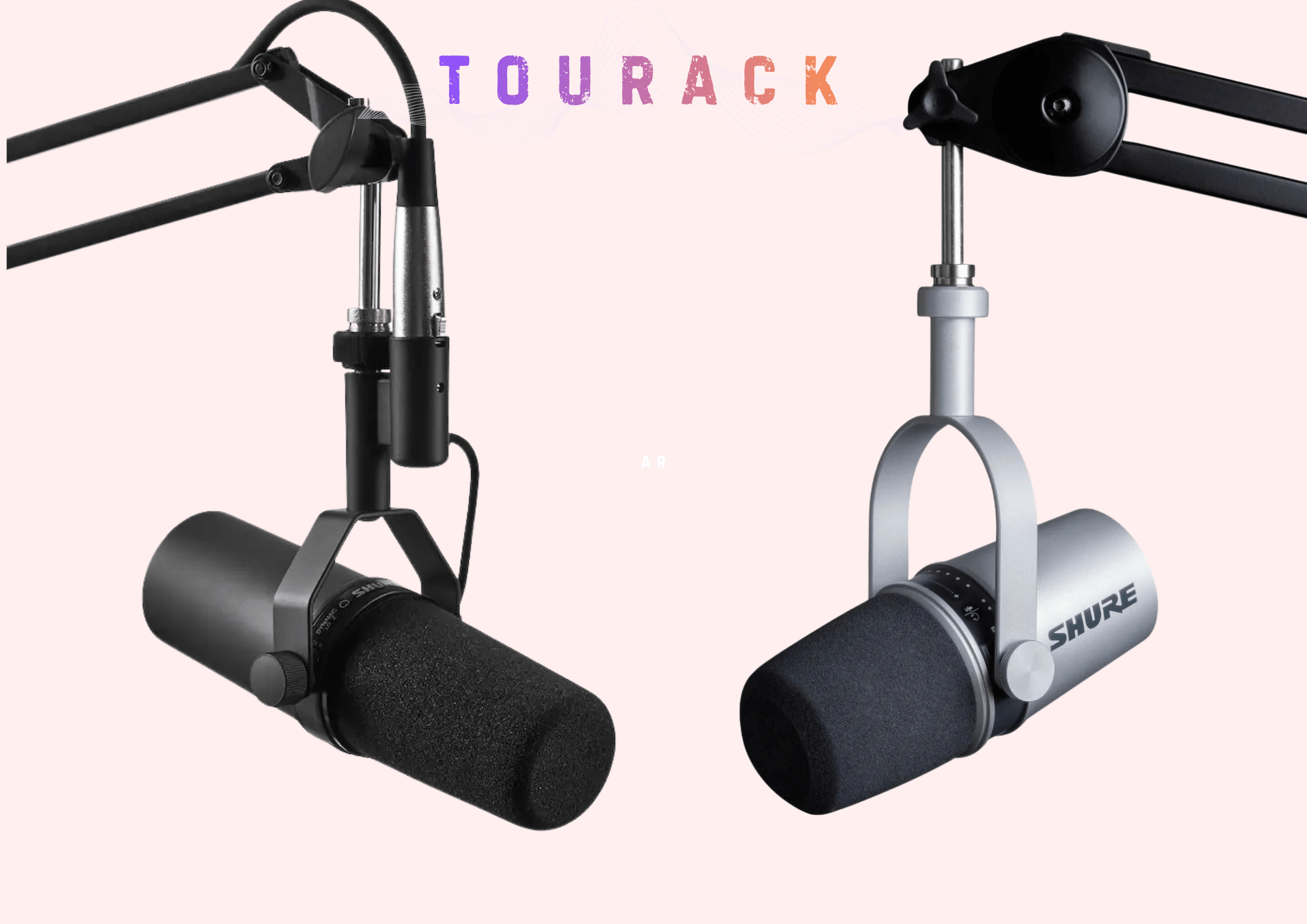
Two of its most popular models—the Shure SM7B and Shure MV7—are frequently compared because they share a similar broadcast-inspired design while serving different types of users.
At first glance, they look alike. Both are dynamic microphones designed to minimize background noise and deliver a warm, professional sound. However, their connectivity, features, and intended workflows make each microphone a better fit for different recording environments.
This guide compares the SM7B and MV7 to help you choose the right microphone for your needs.
\Design & Build Quality
Both microphones feature the rugged construction Shure is known for.
The SM7B has become an industry standard in professional broadcast studios and recording facilities, while the MV7 adopts a similar design in a more compact form.
Both microphones are built to withstand years of regular use.
Connectivity
Shure SM7B
The SM7B uses an XLR connection only.
This means you’ll need:
- An audio interface
- Mixer
- Broadcast console
It is designed for traditional recording workflows.
Shure MV7
The MV7 offers:
- USB
- XLR
This flexibility allows beginners to plug directly into a computer using USB while still providing an upgrade path to professional XLR equipment later.
For many new creators, this is one of the MV7’s biggest advantages.
Sound Quality
Both microphones produce the smooth, natural sound that Shure is known for.
SM7B
The SM7B delivers:
- Warm vocal tone
- Excellent off-axis rejection
- Smooth high frequencies
- Rich low-end response
Its sound has made it a favorite in professional radio stations, recording studios, and podcast production.
MV7
The MV7 shares much of the same broadcast-inspired character while adding built-in digital processing when connected via USB.
It produces excellent results for:
- Podcasting
- Streaming
- Video production
- Voice-over work
While many listeners may not notice a dramatic difference, experienced engineers often appreciate the additional refinement of the SM7B in professionally treated recording environments.
Ease of Use
SM7B
Best suited for users who already own:
- Audio interface
- Microphone preamp
- Recording software
It requires more supporting equipment but offers maximum flexibility.
MV7
Designed with simplicity in mind.
Simply connect via USB and begin recording.
Features include:
- Built-in headphone output
- Touch controls
- Automatic level adjustment
- USB monitoring
This makes it especially attractive for beginners.
Which Microphone Is Better for Podcasting?
Both microphones perform exceptionally well.
Choose:
SM7B if you:
- Already own professional recording equipment
- Want maximum flexibility
- Record in a dedicated studio
MV7 if you:
- Want simple USB connectivity
- Are starting your first podcast
- Need portability
- Record from multiple locations
Which Is Better for Music Recording?
For studio vocal recording:
The SM7B remains a favorite among recording engineers thanks to its proven performance and integration into professional studio workflows.
The MV7 is certainly capable of recording music, but its primary design focus is podcasting, streaming, and content creation.
Pros & Cons
Shure SM7B
Pros
- Professional studio standard
- Excellent vocal quality
- Outstanding background noise rejection
- Extremely durable
- Highly flexible with professional equipment
Cons
- Requires an audio interface
- Requires additional recording equipment
- Higher overall system cost
Shure MV7
Pros
- USB and XLR connectivity
- Easy setup
- Built-in headphone monitoring
- Excellent value
- Great for beginners
Cons
- Fewer advanced studio workflow options
- USB features depend on computer connectivity
Which One Should You Buy?
Choose the Shure SM7B if:
- You’re building a professional recording studio.
- You already own an audio interface or mixer.
- You want a microphone that’s widely used in professional broadcasting and music production.
Choose the Shure MV7 if:
- You’re starting a podcast or YouTube channel.
- You want a simple plug-and-play setup.
- You’d like the flexibility of both USB and XLR connections.
- You plan to upgrade your recording setup over time.
Frequently Asked Questions
Is the SM7B worth the extra cost?
For users with a professional recording setup, the SM7B remains one of the industry’s most respected dynamic microphones. For beginners, the additional equipment required may increase the overall investment.
Can I connect the SM7B directly to my computer?
No. The SM7B requires an audio interface, mixer, or compatible XLR recording device.
Does the MV7 sound as good as the SM7B?
Both microphones deliver excellent audio quality. The SM7B is generally favored in professional studio environments, while the MV7 offers outstanding performance and convenience for content creators, podcasters, and streamers.
Which microphone rejects background noise better?
Both microphones are dynamic designs that naturally reduce ambient noise compared to many condenser microphones. Proper microphone placement and room acoustics remain important for achieving the best results.
Final Thoughts
Both the Shure SM7B and Shure MV7 are excellent microphones, but they serve different audiences.
If you’re building a professional recording studio with dedicated audio equipment, the SM7B continues to be a benchmark for broadcast and studio vocals.
If you’re a podcaster, streamer, educator, or content creator looking for an easy-to-use microphone with modern connectivity, the MV7 offers an excellent balance of performance, flexibility, and convenience.
The right choice ultimately depends on your recording workflow, existing equipment, and long-term goals.
At TOURACK, our TOURACK Advisors™ can help you compare microphones, understand your recording environment, and choose the model that best fits your creative needs.
Related Products
- Shure SM7B
- Shure MV7
- Audio Interfaces
- Broadcast Boom Arms
- XLR Cables
- Closed-Back Studio Headphones
- Pop Filters
Related Articles
- Dynamic vs. Condenser Microphones: Which One Is Right?
- Best Podcast Microphones for Beginners
- Choosing Your First Audio Interface
- USB Microphone vs. XLR Microphone
- Podcast Starter Kit